85% reduction in workflow complexity.
EXECUTIVE SUMMARY
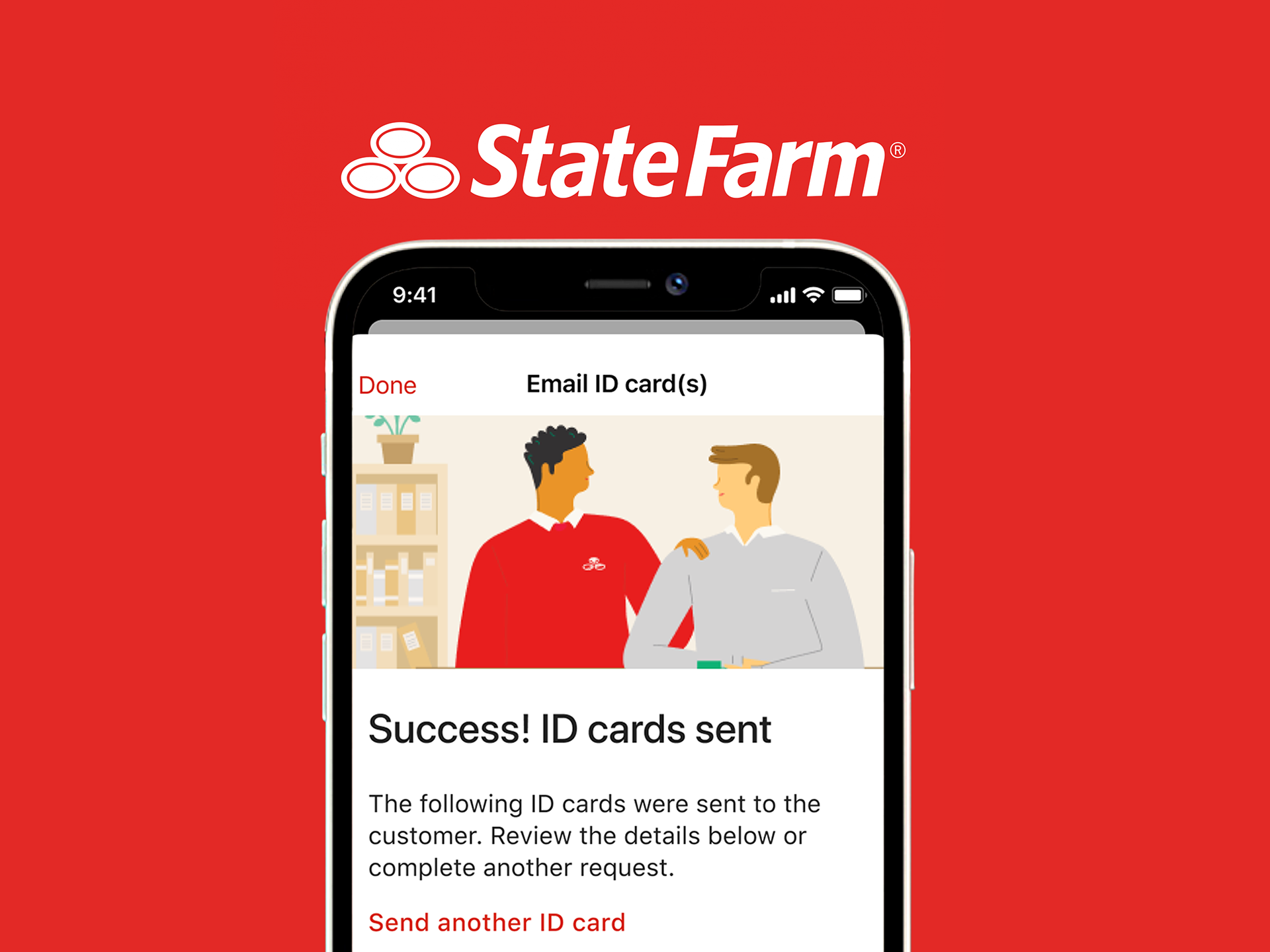
Redesigned the insurance ID card workflow within State Farm's My Mobile Office (MMO) application, reducing the primary agent workflow from approximately 25 interactions to just four while improving the experience for agents assisting customers during live phone conversations.
Business Challenge
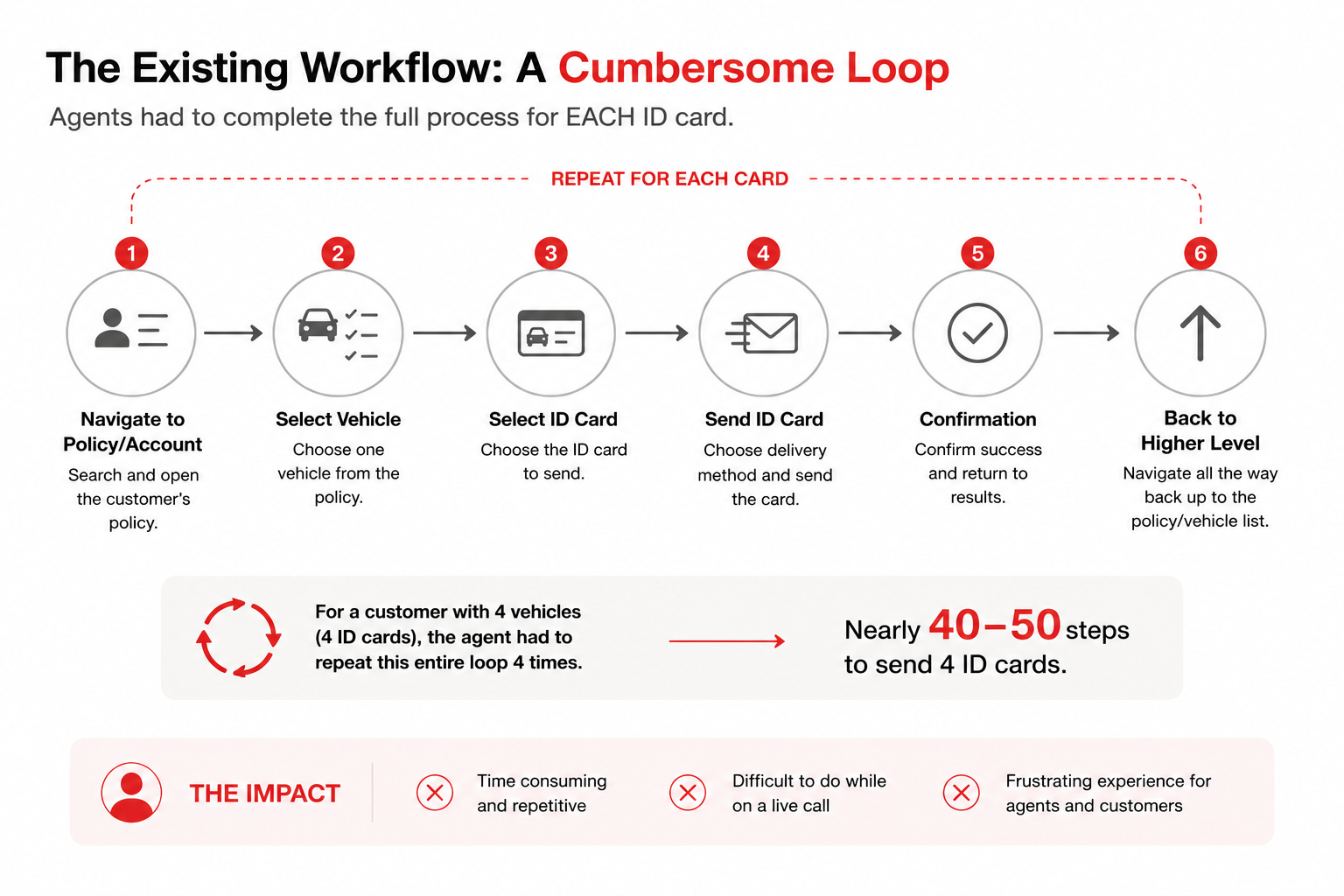
State Farm agents identified sending insurance ID cards as one of their most requested mobile workflows. The existing experience required agents to repeatedly navigate through a lengthy process for each individual vehicle, interrupting live customer conversations and reducing efficiency.
My Role & Responsibilities:
Senior Product Designer
I partnered with Product, Engineering, and Business stakeholders to analyze the existing workflow, challenge implementation assumptions, explore alternative interaction models, and deliver implementation-ready specifications for development.
I partnered with Product, Engineering, and Business stakeholders to analyze the existing workflow, challenge implementation assumptions, explore alternative interaction models, and deliver implementation-ready specifications for development.
⚡︎ Reviewed agent feedback and workflow pain points
⚡︎ Mapped the existing interaction flow
⚡︎ Explored alternative interaction models
⚡︎ Collaborated with Product and Engineering
⚡︎ Produced detailed UI specifications
⚡︎ Supported implementation through development
Approach
Understand → Define → Design → Validate → Scale
UNDERSTAND
I began by understanding both the existing experience and the underlying business and customer problems before proposing solutions.
⚡︎ Reviewed existing agent feedback and interviewed several agents
⚡︎ Investigated State Farm Agents current digital workflow how they send ID Cards to customers, from requests in office (Desktop) and on MMO (Mobile App)
⚡︎ Investigated how State Farm agents interact with their customers, frequency of ID card requests, difficulty level of their current experience, etc.
⚡︎ Investigated State Farm Agents current digital workflow how they send ID Cards to customers, from requests in office (Desktop) and on MMO (Mobile App)
⚡︎ Investigated how State Farm agents interact with their customers, frequency of ID card requests, difficulty level of their current experience, etc.
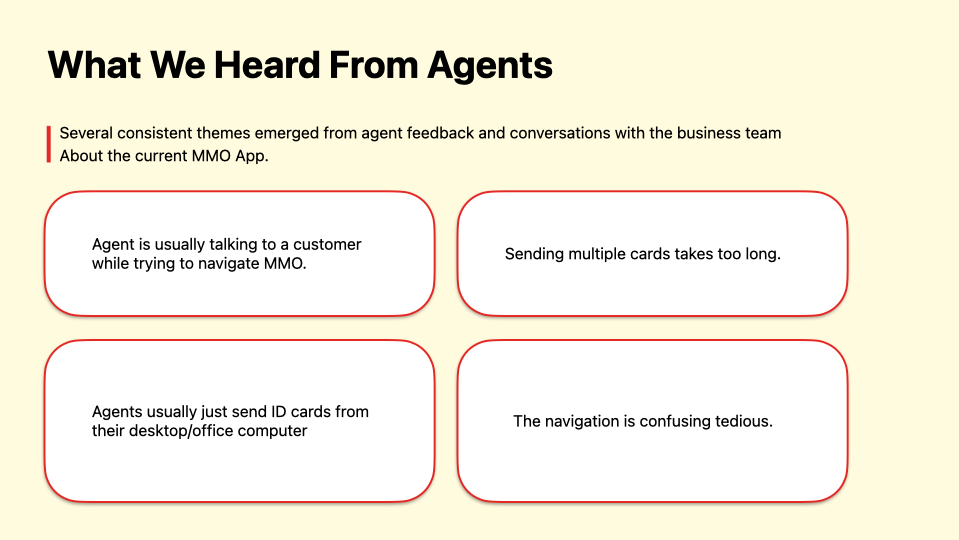
Artifact 1 - Common Themes from Agent Interviews
This slide highlights a few of the recurring themes from feedback and direct interviews with State Farm agents regarding their workflow and use of MMO
DEFINE
I began by understanding both the existing experience and the underlying business and customer problems before proposing solutions.
⚡︎ Reframed the Problem
⚡︎ Simplified the Task Model
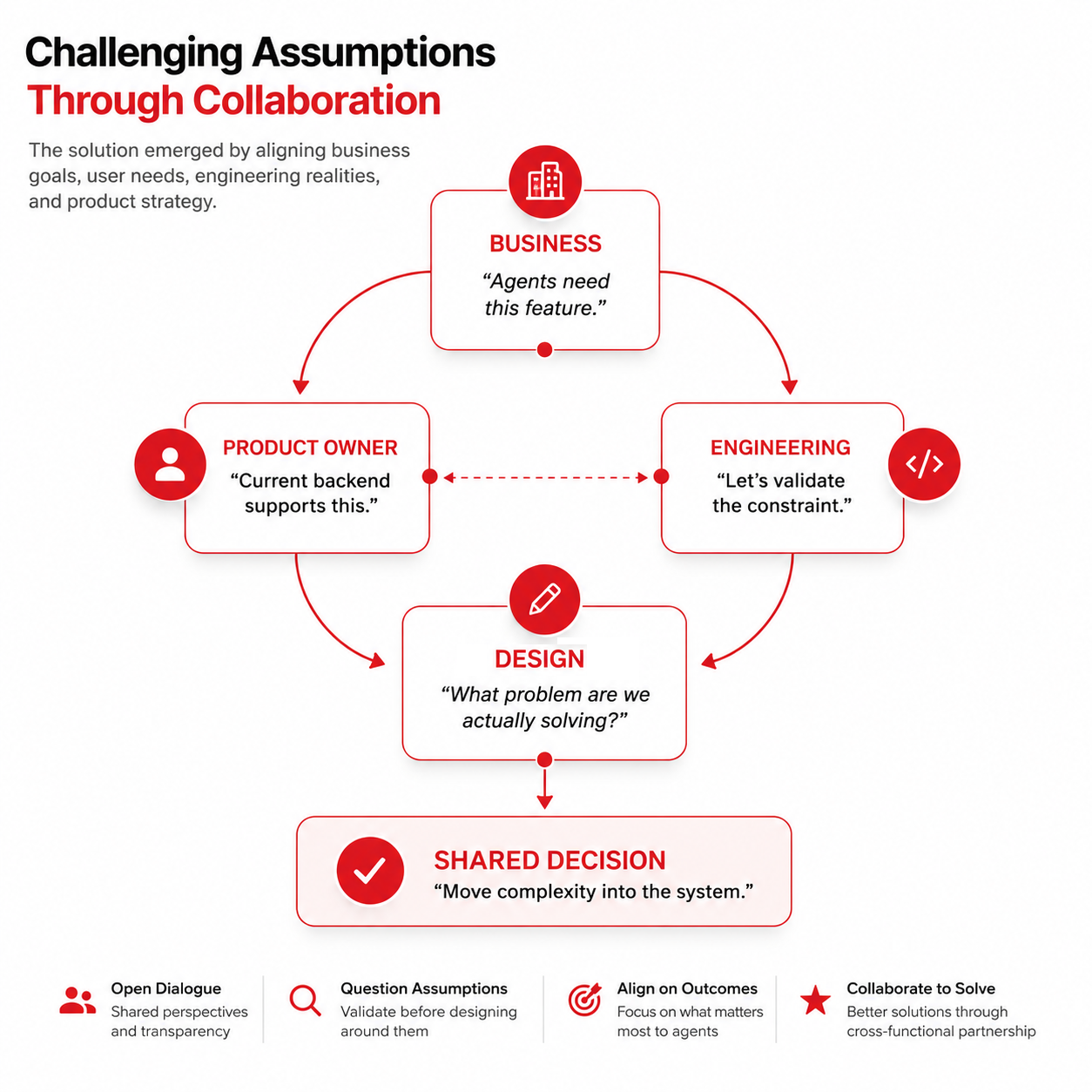
⚡︎ Questioned Backend Assumptions
⚡︎ Simplified the Task Model
⚡︎ Questioned Backend Assumptions
DESIGN
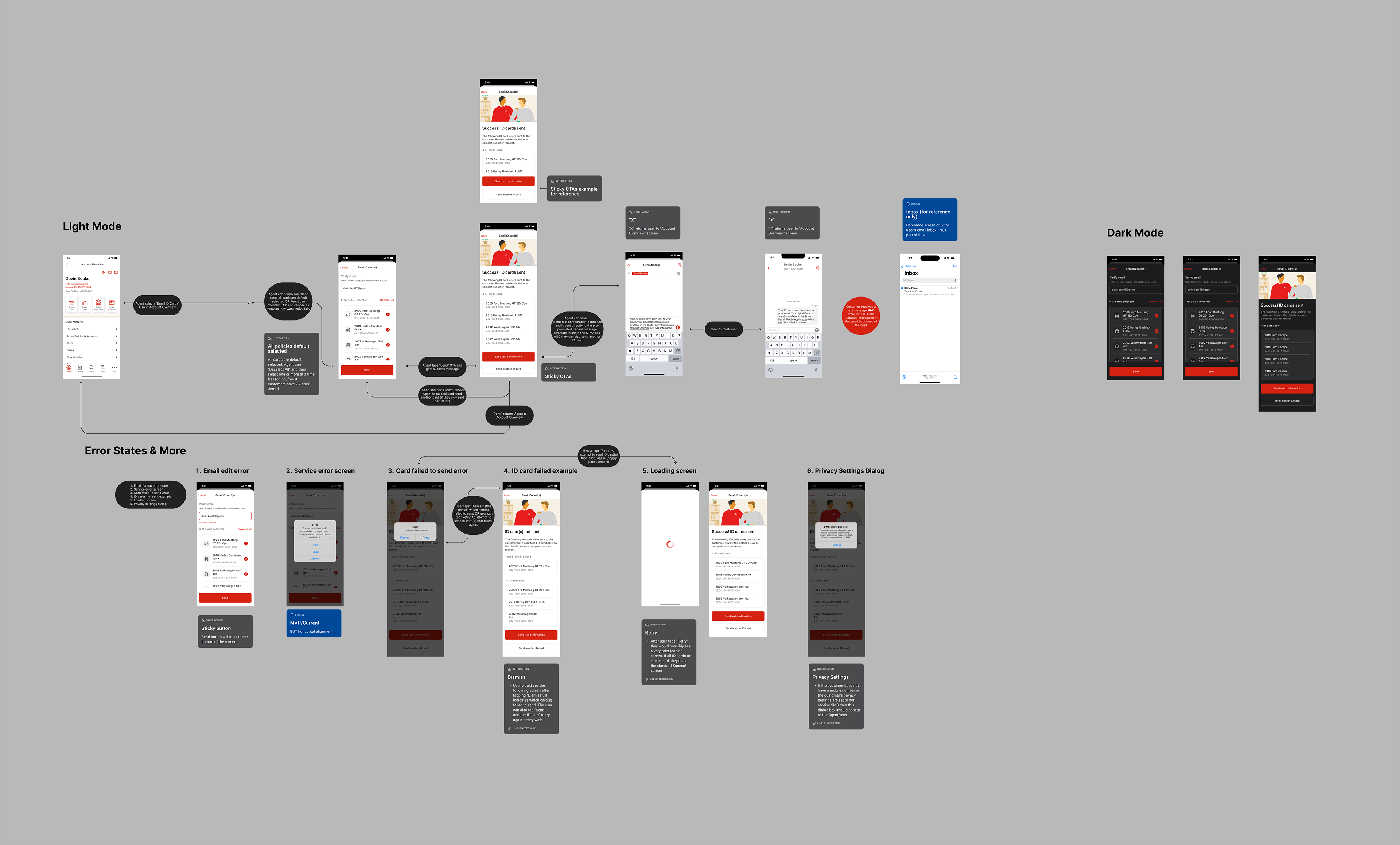
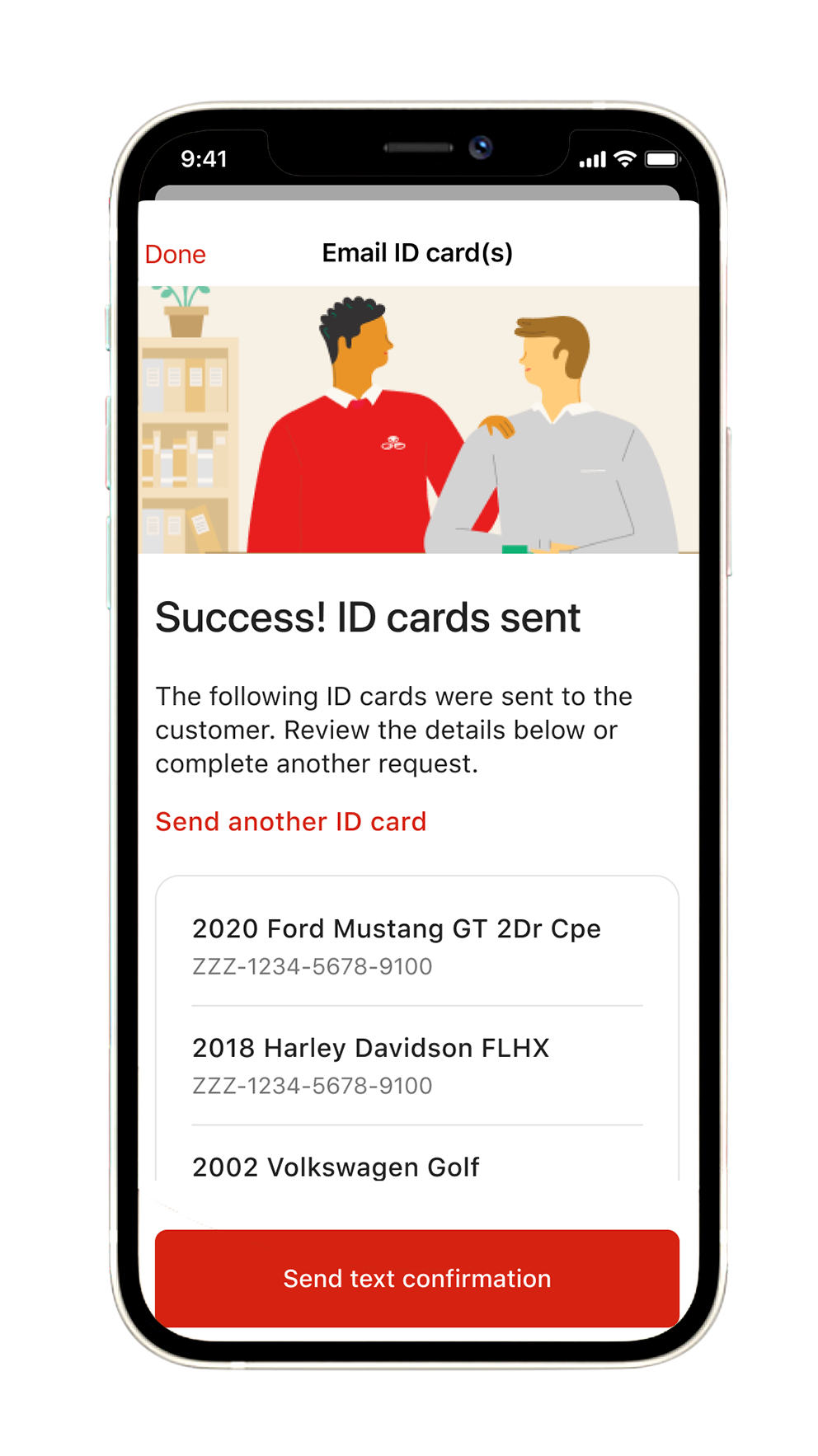
⚡︎ New Interaction Flow
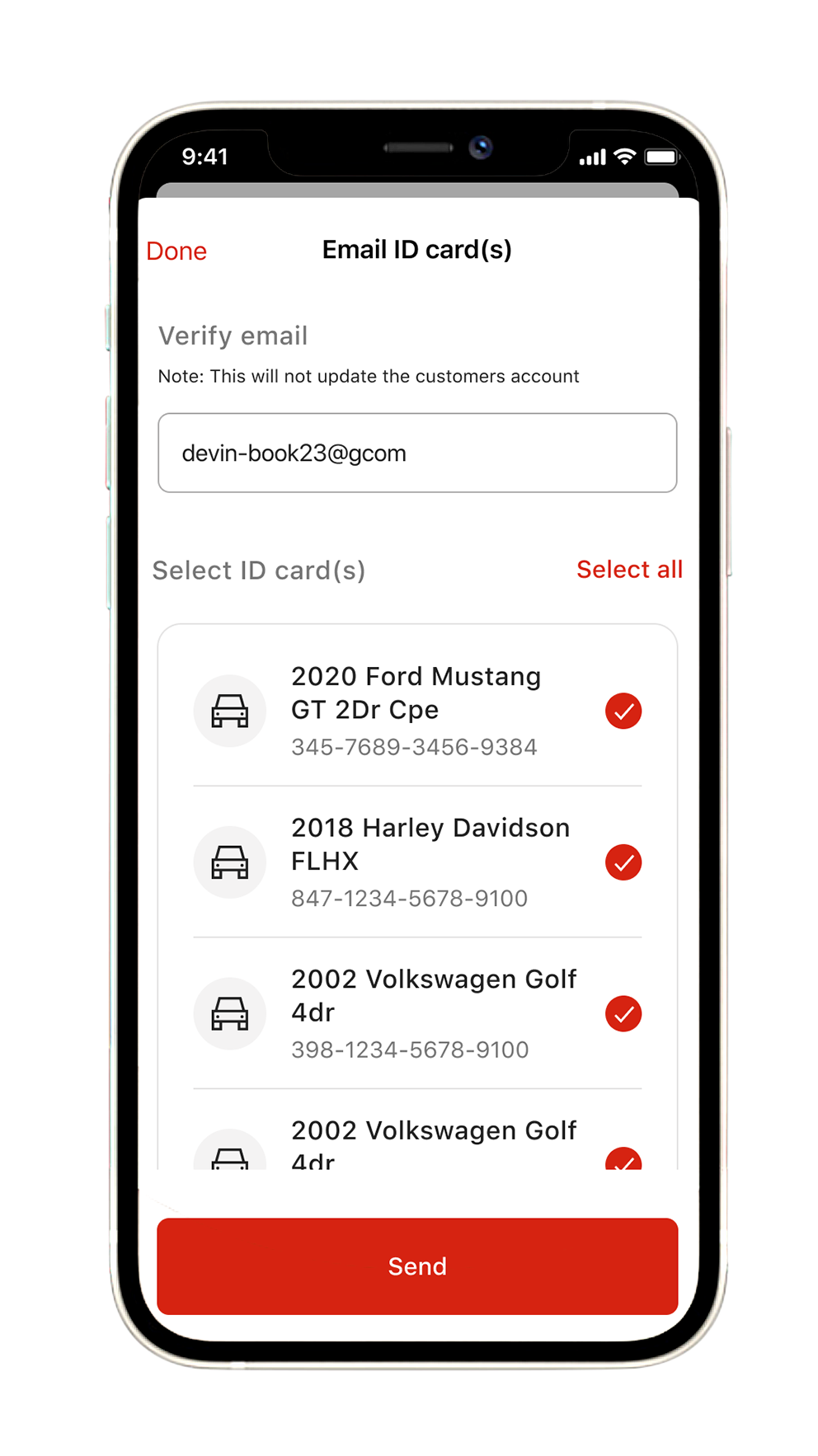
⚡︎ Batch Card Selection
⚡︎ Detailed UI Specifications
⚡︎ Batch Card Selection
⚡︎ Detailed UI Specifications
VALIDATE
⚡︎ Product Review
⚡︎ Engineering Feasibility
⚡︎ Iteration
⚡︎ Engineering Feasibility
⚡︎ Iteration
SCALE
⚡︎ Workflow adopted for national agent population
⚡︎ Opportunity to integrate additional agent tools into MMO
⚡︎ Recommendation to surface the consumer mobile app after task completion
⚡︎ Opportunity to integrate additional agent tools into MMO
⚡︎ Recommendation to surface the consumer mobile app after task completion
RESULTS
⚡︎ 85% reduction in workflow complexity
⚡︎ Reduced approximately 25 interactions to 4
⚡︎ Simplified sending multiple insurance ID cards
⚡︎ Reduced interruptions during live customer conversations
⚡︎ Product and Engineering aligned on a better implementation approach
⚡︎ Balanced business goals with agent usability
⚡︎ Reduced approximately 25 interactions to 4
⚡︎ Simplified sending multiple insurance ID cards
⚡︎ Reduced interruptions during live customer conversations
⚡︎ Product and Engineering aligned on a better implementation approach
⚡︎ Balanced business goals with agent usability
REFLECTION
This project reinforced that product design is often less about creating new interfaces than about questioning assumptions. By collaborating closely with Product and Engineering, we discovered that complexity did not need to remain in the user experience simply because it existed in the original implementation. Moving that complexity into the system produced a better outcome for agents, customers, and the business.
Well-intentioned design and visual clarity can inspire moments of delight for users’ routine tasks